
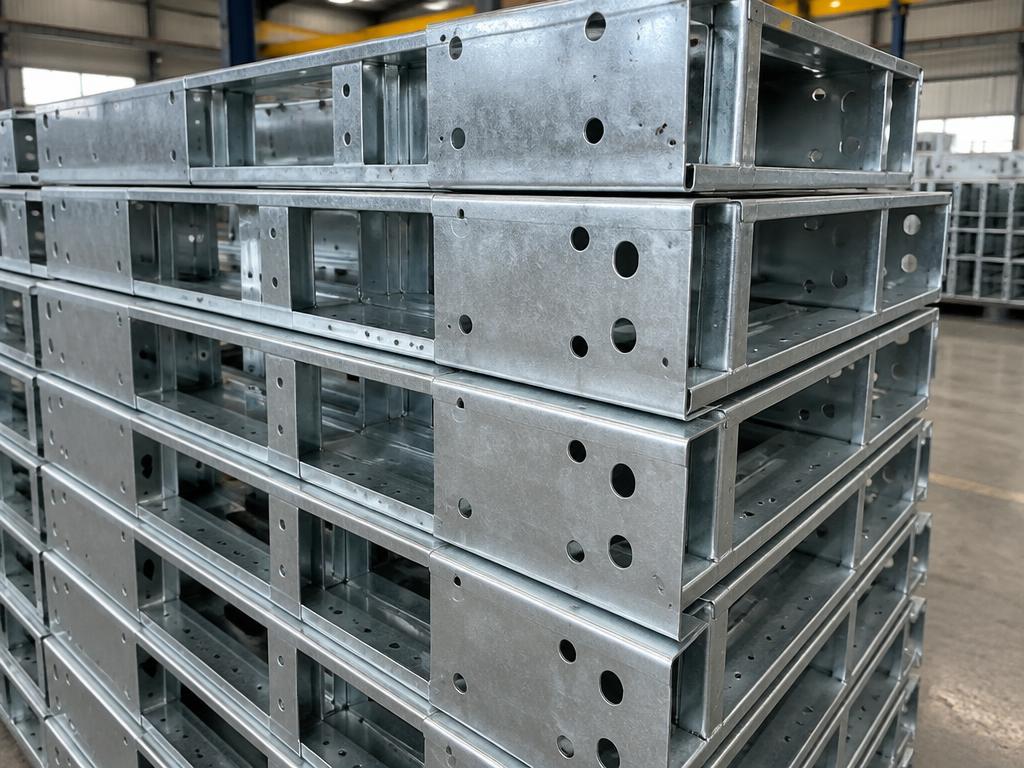
Why steel
Steel vs timber
Straight, strong and termite proof. Here's how light gauge steel stacks up.
Comparison
Side by side
| Factor | Titan steel | Timber |
|---|---|---|
| Termites | Termite and borer proof | Needs treatment and ongoing protection |
| Fire | Non-combustible | Combustible |
| Warping / shrinking | Won't warp, twist or shrink | Can warp, twist and shrink as it dries |
| Weight | Light, easy to handle | Heavier for equivalent members |
| Straightness | Precision roll-formed, dead straight | Varies piece to piece |
| Recyclability | 100% recyclable | Limited, often treated |
| Consistency | Every member made from a digital file | Natural variation |
Benefits
Why builders switch
Strength-to-weight ratio
High-tensile steel delivers serious strength in light, easy-to-handle members.
Termite and borer proof
Steel isn't food. The frame itself can't be eaten.
Non-combustible
Suitable for bushfire-prone areas, subject to design.
No settling cracks
No shrinkage as the frame dries, so fewer cracks in plaster and cornices.
Faster build time
Pre-made, labelled panels go up quickly.
100% recyclable
Offcuts and end-of-life steel can be recycled.
For carpenters
Timber to steel: an easy transition
- Same layout logic: studs, plates, noggins, lintels.
- Screws instead of nails, using standard tools with the right bits.
- Every member is labelled and matches the layout plans.
- No sorting through bowed or twisted lengths.
- We provide install guidance and on-call support.
![Carpenters fixing a steel roof truss [placeholder photo]](/assets/hero-QFxNJJcL.jpg)